Why Does My Car Vibrate At Speed?
Published on: Wednesday, 22 July 2026 | Author: Jessica Bird

It can be startling when a car begins to vibrate at speed. Even if the shaking feels fairly minor, it can quickly make you wonder whether something’s wrong, and whether it’s still safe to keep driving. While the cause isn’t always immediately serious, it is worth paying attention to.
It could be something simple, like a wheel that needs balancing, or it could point to an issue with your tyres, brakes, suspension, steering, or drivetrain.
The way the vibration feels can also tell us a lot. You might notice it through the steering wheel, the seat, the pedals, or the body of the car. It may happen at certain speeds, when accelerating, or when braking. Let’s look at these common reasons, what the signs might mean, and when it’s best to take it to the experts.
The most common cause is wheel balancing
If your car only starts vibrating once you reach a certain speed, wheel balancing is one of the first things we’d check.
Your wheels and tyres need to spin evenly. If the weight around the wheel isn’t perfectly balanced, even by a small amount, it can cause vibration as speed increases. You’ll often notice this through the steering wheel - especially between 50 and 70 mph – because as the tyres start to spin faster, the inconsistencies in their rotation become more obvious.
Wheel balancing is a routine job, and it’s usually quick to sort. Essentially, we add small weights to the wheel to even things out, which helps your tyres rotate smoothly again. If the vibration appeared after having new tyres fitted, or after hitting a pothole or kerb, then balancing (or, rather, imbalancing) could well be the culprit.
Your tyres might be damaged or unevenly worn
Tyres do a lot more than simply keep your car moving. They affect handling, braking, comfort, and how your car feels on the road. So, if something’s wrong with them, vibration can be one of the first signs.
Specifically, uneven tyre wear can cause your car to shake, particularly at higher speeds. And uneven wear can happen if your wheel alignment is out, your tyres are underinflated, or parts of your suspension are worn. You might also have a bulge, flat spot, or internal damage to the tyre, which isn’t always obvious at a glance.
Wheel alignment could be out
If your car vibrates at speed and also pulls to one side, it’s possible that your wheel alignment is off.
Alignment basically makes sure that your wheels are pointing in the right direction (it’s also often called “tracking”). When they’re not in alignment, the wheels all fight each other. For example, the wheels may want to be rolling away from each other if one of them has been knocked out of alignment due to a pothole.
The actual level of play here is often very small – but at speed, this builds into a noticeable judder. When driving at low speeds, you can also sometimes notice your steering wheel sitting slightly off-centre when you’re driving on a straight, level road – which tends to be another sign that your alignment needs looking at.
Brake problems can cause shaking
If the vibration happens when you brake, rather than when you’re simply driving at speed, it could be due to brakes.
A common cause is warped or unevenly worn brake discs. When you press the brake pedal, the brake pads clamp against the discs to slow the car down. If the disc surface isn’t even, you might feel a pulsing or shaking through the steering wheel, brake pedal, or body of the car.
Crucially (unlike alignment), this isn’t something to put off. Your brakes are one of the most important safety systems on your vehicle, so if shaking happens during braking, it’s worth booking an inspection as soon as you can.
Worn suspension or steering parts
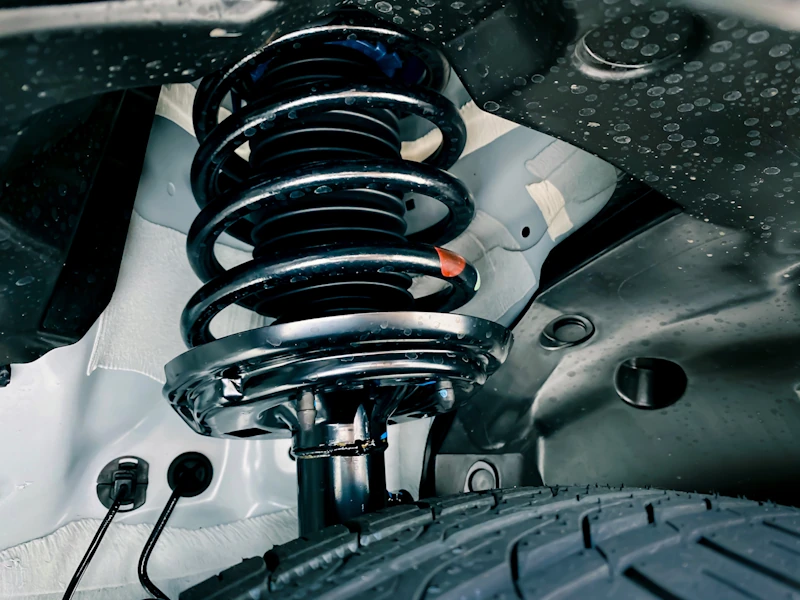
Your suspension and steering systems help keep your car stable, comfortable, and controlled. Over time, however, parts like bushes, ball joints, wheel bearings, and track rod ends can wear out.
When they do, you tend to feel vibration at speed, hear knocking noises, notice vague steering, or feel the car wandering slightly on the road. However, it’s important to note that these symptoms can often creep up gradually, so it’s easy to get used to them without realising something has changed.
Could it be an engine or drivetrain issue?
Not all vibrations come from the wheels or tyres. Sometimes, the issue can be linked to the engine, gearbox, driveshafts, or CV joints.
A useful clue is to be mindful of when the vibration happens. If your car shakes while accelerating, but settles when you ease off, it could be related to the drivetrain. If the vibration happens even when the car is stationary and the engine is running, it may be an engine mount, misfire, or another engine-related issue.
These problems can be harder to diagnose without a proper inspection, so it’s worth getting professional advice.
Is it safe to keep driving?
Whether it’s safe to keep driving or not depends on the cause, but it’s wise to not ignore vibration at speed – simply because you can’t know if it’s a quick-fix wheel balance issue or a sign of a more dangerous component problem.
If the vibration is strong or sudden, it’s safest to pull over and get help. When you’re able to, however, trust the experts at your local Tyre Pros centre to find the cause and get you safely back on the road in no time.